Buy ssub.eu ?
We are moving the project
ssub.eu .
Are you interested in purchasing the domain
ssub.eu ?
domain@kv-gmbh.de · 0541-91531010
Buy ssub.eu ?
What is the difference between absolutism and enlightened absolutism?
Absolutism is a form of government where the ruler holds absolute power and authority, often justified by the divine right of kings. In absolutist regimes, the ruler's decisions are not subject to any kind of limitation or checks and balances. On the other hand, enlightened absolutism is a form of government where the ruler exercises absolute power but also incorporates Enlightenment principles such as rationality, tolerance, and progress. Enlightened absolutist rulers aimed to improve the lives of their subjects through reforms in areas such as education, justice, and economy, while still maintaining their absolute authority. **
What is absolutism?
Absolutism is a political theory that advocates for a single ruler, typically a monarch, who holds absolute power and authority over the government and the people. This form of government is characterized by centralized control, where the ruler has unchecked power and is not bound by a constitution or laws. Absolutism often involves the belief in the divine right of kings, where the monarch's authority is seen as coming directly from a higher power. This system of government was prevalent in Europe during the 17th and 18th centuries. **

Similar search terms for Absolutism
Top-Angebote
Products related to Absolutism:
-
The Readers Paradise Psychology of Efficiency: Master Your Mind, Maximize Your Output by Rishav - Self-Help Paperback - Non Fiction Productivity BookDeadlines pile up, distractions multiply, and your to-do list never seems to shrink. Psychology of Efficiency: Master Your Mind, Maximize Your Output by Rishav goes beyond standard time-management advice to tackle the real root of low performance: the mind itself. Rather than offering another planner or app, this paperback guide explores the mental frameworks, habits, and triggers that quietly drain focus and output. Readers are shown how to identify exactly where attention leaks occur and how to close those gaps for good, building sustainable, high-level performance from the inside out. This brand new paperback is built around a simple idea: efficiency is first a psychological skill, not a scheduling trick. Rishav draws on practical psychology to show that thoughts shape actions, and actions determine results, so productivity becomes a manageable skill rather than an overwhelming task.2,99 £*Shipping: 2,99 £Secure redirect to the provider
-
Thunderworks Games Tenpenny Parks Innovation Expansion - Strategic Park ManagementTake your Tenpenny Parks experience further with the Innovation expansion from Thunderworks Games. Develop new ideas for your park, recruit additional specialists, and introduce exciting novelties that can change the way you plan and build. This expansion adds fresh strategic options to the park-management gameplay of Tenpenny Parks. Use research to improve your development plans, bring new specialists into your team, and create more distinctive attractions as you compete to shape a successful park. What’s included: Key features: - New innovation-focused content for Tenpenny Parks - Additional specialists to support your plans - New research and novelty options - More strategic choices during development Please note: This is an expansion and requires the Tenpenny Parks base game to play. It is suitable for players who want to add variety and further strategic depth to their existing game.36,99 £*Shipping: 3,95 £Secure redirect to the provider
-
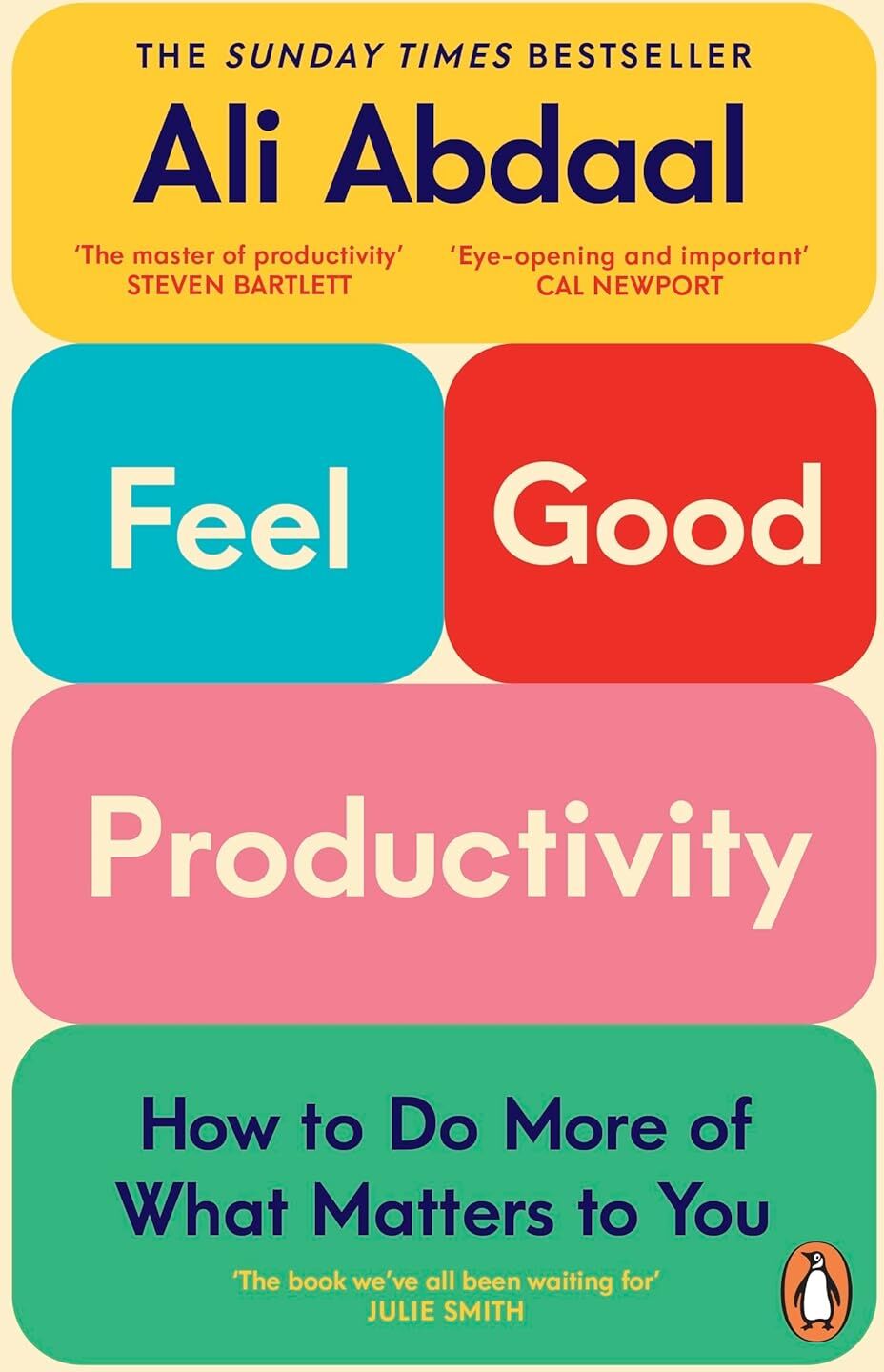
Cornerstone Feel-Good Productivity by Ali Abdaal - Paperback - Bestselling Self-Help & Productivity Book for AdultsDiscover a new approach to productivity with Feel-Good Productivity by Ali Abdaal. This non-fiction paperback book offers a guide to achieving more by finding genuine joy in your work, rather than relying on discipline and willpower. Backed by psychological research and Abdaal's own experience balancing medicine, business, and content creation, the book reframes productivity as a by-product of happiness. It's aimed at anyone feeling stuck in hustle culture and searching for a sustainable, guilt-free way to get things done while protecting their wellbeing and energy. In Feel-Good Productivity, Ali Abdaal dismantles the myth that success requires relentless grind and iron discipline. Instead, he presents a framework built around three 'energisers' — play, power, and people — showing readers how to inject more joy into everyday tasks so that motivation follows naturally rather than being forced. Drawing on peer-reviewed psychology, behaviour, and real-world experience, this book provides a fresh perspective on productivity and happiness.5,99 £*Shipping: 2,99 £Secure redirect to the provider



-
What is princely absolutism?
Princely absolutism refers to a form of government in which a monarch holds absolute power and authority over their realm. This system of governance emerged in Europe during the early modern period, particularly in states where powerful monarchs sought to centralize control and limit the influence of nobles and other competing power structures. Princely absolutism was characterized by the concentration of political, military, and economic power in the hands of the monarch, often at the expense of traditional feudal institutions. This form of governance was prevalent in countries such as France, Spain, and Russia during the 16th to 18th centuries. **
-
What is enlightened absolutism?
Enlightened absolutism was a form of government in the 18th century in which absolute monarchs sought to use their power to bring about social and political reforms inspired by the Enlightenment ideals of reason, progress, and tolerance. These monarchs, such as Frederick the Great of Prussia and Catherine the Great of Russia, aimed to centralize their authority while also implementing policies to improve the welfare of their subjects, such as religious tolerance, legal reforms, and economic development. However, despite these efforts, the ultimate goal of enlightened absolutism was to strengthen the power and authority of the monarch. **
-
What is war absolutism?
War absolutism is the belief that war is a legitimate and necessary tool for achieving a nation's goals, and that it should be pursued without limitations or constraints. This ideology holds that military force is the ultimate means of achieving political objectives, and that it should be used decisively and aggressively. War absolutism often rejects the idea of diplomacy and compromise, and instead prioritizes the use of force to achieve a nation's interests. **
-
What is confessional absolutism?
Confessional absolutism is the belief that one's own religious or moral beliefs are the only true and correct ones, and that all other beliefs are false or invalid. This ideology often leads to a strict adherence to one's own beliefs and a refusal to consider or accept any alternative viewpoints. Confessional absolutism can result in intolerance, close-mindedness, and a lack of willingness to engage in dialogue or compromise with those who hold different beliefs. **


What does absolutism mean?
Absolutism refers to a form of government in which a single ruler, usually a monarch, holds absolute power and authority over the state and its people. This means that the ruler has unchecked power and is not bound by any laws or institutions, allowing them to make decisions and enforce their will without any limitations. Absolutist rulers often justified their power through the concept of divine right, claiming that they were chosen by God to rule and that their authority was absolute and unquestionable. This form of government was prevalent in Europe during the 17th and 18th centuries. **
What is absolutism in history?
Absolutism in history refers to a form of government where a single ruler, typically a monarch, holds absolute power and authority over the state and its people. This system of governance emerged in Europe during the 17th and 18th centuries, with rulers claiming divine right to rule and making decisions without the need for approval from a parliament or other governing body. Absolutist monarchs sought to centralize power, control the nobility, and impose their will on all aspects of society, often leading to increased state control and limited individual freedoms. **
Top-Angebote
Products related to Absolutism:
-
Ring Battery Video Doorbell Pro – Advanced Home Security & Connectivity, NewUpgrade your home security with the Ring Battery Video Doorbell Pro – Wireless Video Doorbell Security Camera. Designed to give you peace of mind, it delivers a head-to-toe 1536p HD view so you can see every detail clearly, from visitors to parcels at your doorstep. With advanced 3D Motion Detection and Bird’s Eye View, you’ll always know what’s happening around your home. The built-in colour night vision ensures crisp images even in the dark, while the wire-free battery design makes installation simple and flexible. Stay connected anywhere with instant notifications, two-way talk, and full integration with the Ring app, Alexa devices, and more. ✔️ Wireless video doorbell – Easy to install with a rechargeable battery, no wiring needed ✔️ 1536p HD head-to-toe view – See visitors and packages clearly in high definition ✔️ 3D Motion Detection & Bird’s Eye View – Advanced alerts and aerial perspective for extra security ✔️ Colour night vision – Crystal-clear video even in low light or darkness ✔️ Two-way talk with noise cancellation – Hear and speak to visitors in real time ✔️ Customisable motion zones – Focus on the areas that matter most ✔️ Smart alerts & notifications – Instant updates on your phone via the Ring app ✔️ Alexa compatible – Works seamlessly with Echo devices for hands-free monitoring ✔️ Quick-release battery pack – Easy to recharge and swap for uninterrupted security ✔️ Durable design – Built to withstand outdoor weather conditions The Ring Battery Video Doorbell Pro combines advanced motion detection, high-definition video, and smart home integration in one sleek device. Perfect for enhancing your home security, it ensures you never miss a visitor or delivery, day or night.174,49 £*Shipping: 0,00 £Secure redirect to the provider
-
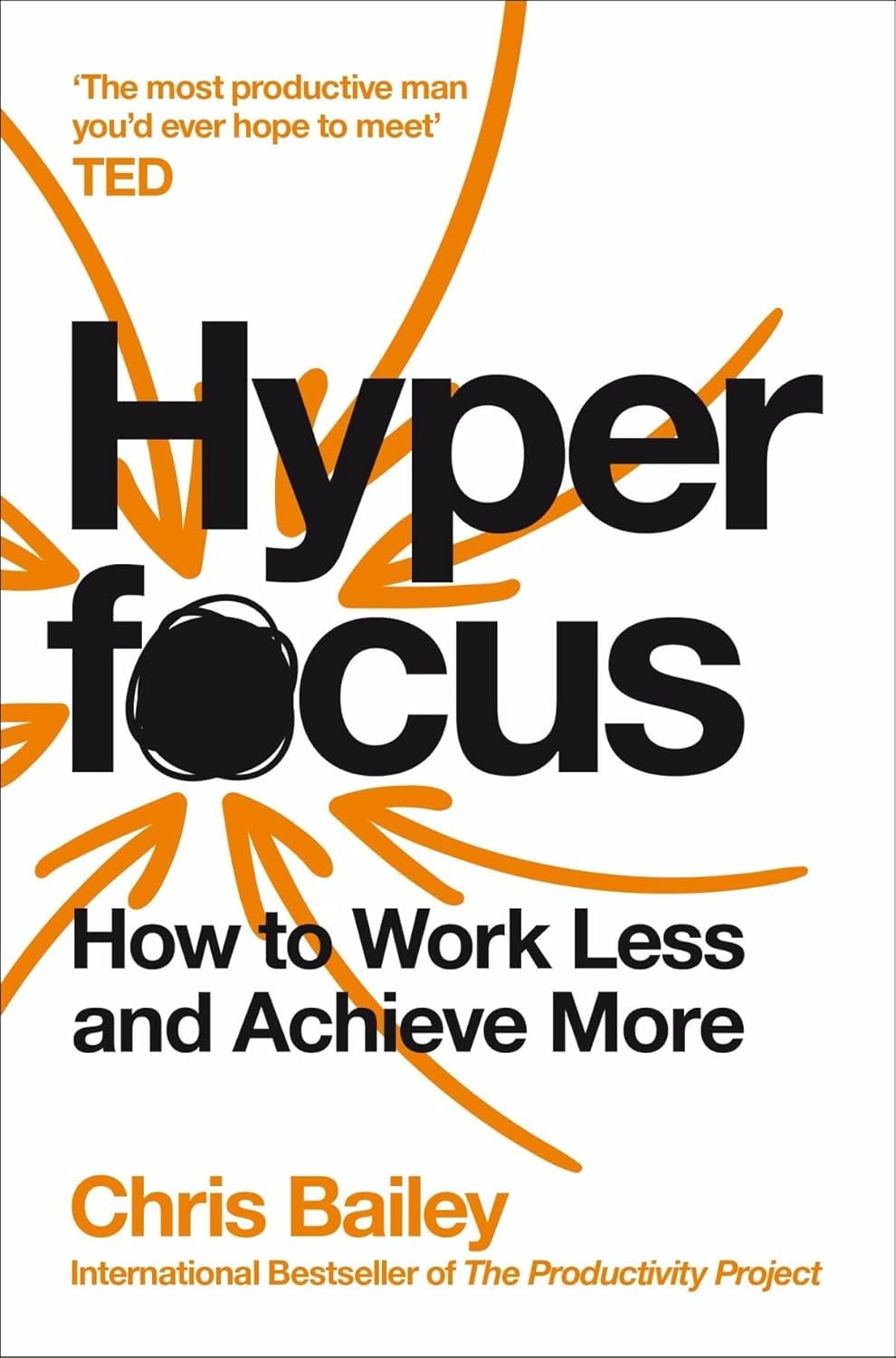
Various Publishers How To Talk To Anyone by Leil Lowndes & Hyperfocus by Chris Bailey - 2 Book Paperback Set - Communication & Productivity Self-Help - NewThis two-book paperback set includes 'How To Talk To Anyone: 92 Little Tricks for Big Success in Relationships' by Leil Lowndes and 'Hyperfocus: How to Be More Productive in a World of Distraction' by Chris Bailey. 'How To Talk To Anyone' delivers practical techniques for confident, memorable conversation, while 'Hyperfocus' offers a science-backed system for reclaiming attention and getting more done with less effort. The books are in new condition, published by HarperCollins and Pan Macmillan respectively, and are suitable for adult readers.9,99 £*Shipping: 2,99 £Secure redirect to the provider
-
The Readers Paradise Psychology of Efficiency: Master Your Mind, Maximize Your Output by Rishav - Self-Help Paperback - Non Fiction Productivity BookDeadlines pile up, distractions multiply, and your to-do list never seems to shrink. Psychology of Efficiency: Master Your Mind, Maximize Your Output by Rishav goes beyond standard time-management advice to tackle the real root of low performance: the mind itself. Rather than offering another planner or app, this paperback guide explores the mental frameworks, habits, and triggers that quietly drain focus and output. Readers are shown how to identify exactly where attention leaks occur and how to close those gaps for good, building sustainable, high-level performance from the inside out. This brand new paperback is built around a simple idea: efficiency is first a psychological skill, not a scheduling trick. Rishav draws on practical psychology to show that thoughts shape actions, and actions determine results, so productivity becomes a manageable skill rather than an overwhelming task.2,99 £*Shipping: 2,99 £Secure redirect to the provider
-
Thunderworks Games Tenpenny Parks Innovation Expansion - Strategic Park ManagementTake your Tenpenny Parks experience further with the Innovation expansion from Thunderworks Games. Develop new ideas for your park, recruit additional specialists, and introduce exciting novelties that can change the way you plan and build. This expansion adds fresh strategic options to the park-management gameplay of Tenpenny Parks. Use research to improve your development plans, bring new specialists into your team, and create more distinctive attractions as you compete to shape a successful park. What’s included: Key features: - New innovation-focused content for Tenpenny Parks - Additional specialists to support your plans - New research and novelty options - More strategic choices during development Please note: This is an expansion and requires the Tenpenny Parks base game to play. It is suitable for players who want to add variety and further strategic depth to their existing game.36,99 £*Shipping: 3,95 £Secure redirect to the provider
-
What is the difference between absolutism and enlightened absolutism?
Absolutism is a form of government where the ruler holds absolute power and authority, often justified by the divine right of kings. In absolutist regimes, the ruler's decisions are not subject to any kind of limitation or checks and balances. On the other hand, enlightened absolutism is a form of government where the ruler exercises absolute power but also incorporates Enlightenment principles such as rationality, tolerance, and progress. Enlightened absolutist rulers aimed to improve the lives of their subjects through reforms in areas such as education, justice, and economy, while still maintaining their absolute authority. **
-
What is absolutism?
Absolutism is a political theory that advocates for a single ruler, typically a monarch, who holds absolute power and authority over the government and the people. This form of government is characterized by centralized control, where the ruler has unchecked power and is not bound by a constitution or laws. Absolutism often involves the belief in the divine right of kings, where the monarch's authority is seen as coming directly from a higher power. This system of government was prevalent in Europe during the 17th and 18th centuries. **
-
What is princely absolutism?
Princely absolutism refers to a form of government in which a monarch holds absolute power and authority over their realm. This system of governance emerged in Europe during the early modern period, particularly in states where powerful monarchs sought to centralize control and limit the influence of nobles and other competing power structures. Princely absolutism was characterized by the concentration of political, military, and economic power in the hands of the monarch, often at the expense of traditional feudal institutions. This form of governance was prevalent in countries such as France, Spain, and Russia during the 16th to 18th centuries. **
-
What is enlightened absolutism?
Enlightened absolutism was a form of government in the 18th century in which absolute monarchs sought to use their power to bring about social and political reforms inspired by the Enlightenment ideals of reason, progress, and tolerance. These monarchs, such as Frederick the Great of Prussia and Catherine the Great of Russia, aimed to centralize their authority while also implementing policies to improve the welfare of their subjects, such as religious tolerance, legal reforms, and economic development. However, despite these efforts, the ultimate goal of enlightened absolutism was to strengthen the power and authority of the monarch. **
Similar search terms for Absolutism
-
Cornerstone Feel-Good Productivity by Ali Abdaal - Paperback - Bestselling Self-Help & Productivity Book for AdultsDiscover a new approach to productivity with Feel-Good Productivity by Ali Abdaal. This non-fiction paperback book offers a guide to achieving more by finding genuine joy in your work, rather than relying on discipline and willpower. Backed by psychological research and Abdaal's own experience balancing medicine, business, and content creation, the book reframes productivity as a by-product of happiness. It's aimed at anyone feeling stuck in hustle culture and searching for a sustainable, guilt-free way to get things done while protecting their wellbeing and energy. In Feel-Good Productivity, Ali Abdaal dismantles the myth that success requires relentless grind and iron discipline. Instead, he presents a framework built around three 'energisers' — play, power, and people — showing readers how to inject more joy into everyday tasks so that motivation follows naturally rather than being forced. Drawing on peer-reviewed psychology, behaviour, and real-world experience, this book provides a fresh perspective on productivity and happiness.5,99 £*Shipping: 2,99 £Secure redirect to the provider
-
What is war absolutism?
War absolutism is the belief that war is a legitimate and necessary tool for achieving a nation's goals, and that it should be pursued without limitations or constraints. This ideology holds that military force is the ultimate means of achieving political objectives, and that it should be used decisively and aggressively. War absolutism often rejects the idea of diplomacy and compromise, and instead prioritizes the use of force to achieve a nation's interests. **
-
What is confessional absolutism?
Confessional absolutism is the belief that one's own religious or moral beliefs are the only true and correct ones, and that all other beliefs are false or invalid. This ideology often leads to a strict adherence to one's own beliefs and a refusal to consider or accept any alternative viewpoints. Confessional absolutism can result in intolerance, close-mindedness, and a lack of willingness to engage in dialogue or compromise with those who hold different beliefs. **
-
What does absolutism mean?
Absolutism refers to a form of government in which a single ruler, usually a monarch, holds absolute power and authority over the state and its people. This means that the ruler has unchecked power and is not bound by any laws or institutions, allowing them to make decisions and enforce their will without any limitations. Absolutist rulers often justified their power through the concept of divine right, claiming that they were chosen by God to rule and that their authority was absolute and unquestionable. This form of government was prevalent in Europe during the 17th and 18th centuries. **
-
What is absolutism in history?
Absolutism in history refers to a form of government where a single ruler, typically a monarch, holds absolute power and authority over the state and its people. This system of governance emerged in Europe during the 17th and 18th centuries, with rulers claiming divine right to rule and making decisions without the need for approval from a parliament or other governing body. Absolutist monarchs sought to centralize power, control the nobility, and impose their will on all aspects of society, often leading to increased state control and limited individual freedoms. **
* All prices are inclusive of VAT and, if applicable, plus shipping costs. The offer information is based on the details provided by the respective shop and is updated through automated processes. Real-time updates do not occur, so deviations can occur in individual cases. ** Note: Parts of this content were created by AI.