Buy ssub.eu ?
We are moving the project
ssub.eu .
Are you interested in purchasing the domain
ssub.eu ?
domain@kv-gmbh.de · 0541-91531010
Buy ssub.eu ?
What does 'leur' and 'lui' mean?
In French, 'leur' is a pronoun that means 'their' or 'them' when referring to a group of people or things. It is used to indicate possession or indirect object. On the other hand, 'lui' is a pronoun that means 'him' or 'her' when referring to a singular person. It is used to indicate possession or as an indirect object. **
How is "eux" or "leur" used in French?
"Eux" and "leur" are both pronouns used in French to refer to people or things. "Eux" is used as a direct object pronoun to replace a group of people or things, while "leur" is used as an indirect object pronoun to replace a group of people. For example, "Je les ai vus" (I saw them) uses "les" as a direct object pronoun, while "Je leur ai parlé" (I spoke to them) uses "leur" as an indirect object pronoun. **

Similar search terms for Leur
Top-Angebote
Products related to Leur:
-
The Readers Paradise Psychology of Efficiency: Master Your Mind, Maximize Your Output by Rishav - Self-Help Paperback - Non Fiction Productivity BookDeadlines pile up, distractions multiply, and your to-do list never seems to shrink. Psychology of Efficiency: Master Your Mind, Maximize Your Output by Rishav goes beyond standard time-management advice to tackle the real root of low performance: the mind itself. Rather than offering another planner or app, this paperback guide explores the mental frameworks, habits, and triggers that quietly drain focus and output. Readers are shown how to identify exactly where attention leaks occur and how to close those gaps for good, building sustainable, high-level performance from the inside out. This brand new paperback is built around a simple idea: efficiency is first a psychological skill, not a scheduling trick. Rishav draws on practical psychology to show that thoughts shape actions, and actions determine results, so productivity becomes a manageable skill rather than an overwhelming task.2,99 £*Shipping: 2,99 £Secure redirect to the provider



-
What is the difference between ses, leur and leurs?
Ses, leur, and leurs are all possessive adjectives in French, but they are used in different contexts. "Ses" is used to indicate possession by a singular third person, "leur" is used for a singular third person, and "leurs" is used for plural third person. For example, "ses chaussures" means "his/her shoes," "leur maison" means "their house," and "leurs voitures" means "their cars." It's important to pay attention to the number and gender of the noun being possessed in order to choose the correct possessive adjective. **
-
How are the object pronouns lui and leur used?
The object pronouns lui and leur are used to replace indirect objects in French. Lui is used to replace singular indirect objects, while leur is used to replace plural indirect objects. These pronouns come before the verb in a sentence and agree in gender and number with the noun they are replacing. For example, "Je lui parle" means "I am talking to him/her" and "Je leur donne des cadeaux" means "I am giving them gifts." **
-
'I don't understand the use of lui and leur?'
In French, "lui" and "leur" are both used as indirect object pronouns to replace nouns that are the recipients of the action. "Lui" is used to refer to a singular masculine or feminine noun, while "leur" is used to refer to a plural noun. For example, "Je lui ai donné le livre" means "I gave him/her the book," and "Je leur ai donné les livres" means "I gave them the books." It's important to remember that these pronouns must agree in gender and number with the noun they are replacing. **
-
When do I use leur and leurs in French?
You use "leur" when you want to indicate possession or belonging for a singular noun, and "leurs" when you want to indicate possession or belonging for plural nouns. For example, "leur maison" means "their house" (singular), and "leurs voitures" means "their cars" (plural). **
How do you use the object pronouns lui and leur?
The object pronoun "lui" is used to replace indirect objects referring to a singular person, while "leur" is used to replace indirect objects referring to plural people. For example, "Je lui parle" means "I am talking to him/her" and "Je leur donne des cadeaux" means "I am giving gifts to them." These pronouns come before the verb in a sentence and help avoid repetition of the indirect object. **
What is the difference in French between 'ses' and 'leur'?
In French, 'ses' is a possessive adjective that is used to show possession for a singular noun that is masculine or feminine. It is used when referring to something that belongs to a third person. On the other hand, 'leur' is also a possessive adjective, but it is used for plural nouns. It is used when referring to something that belongs to a third person in the plural form. **
Top-Angebote
Products related to Leur:
-
Roger Hunt Old House Eco Handbook: A Practical Guide to Retrofitting for Energy Efficiency and SustainabilityDescription. Condition: Brand New. Format : Hardback. This practical and essential guide to retrofitting for energy efficiency seeks to provide answers to this and other questions homeowners of old houses are asking. Whether your house is medieval and timber-framed or a Georgian, Victorian or Edwardian terrace, it can be made more energy efficient and sustainable. This practical, comprehensive and fully illustrated handbook will show you how.. Title. Old House Eco Handbook: A Practical Guide to Retrofitting for Energy Efficiency and Sustainability. Delivery. Content. Reviews99,99 £*Shipping: 0,00 £Secure redirect to the provider
-
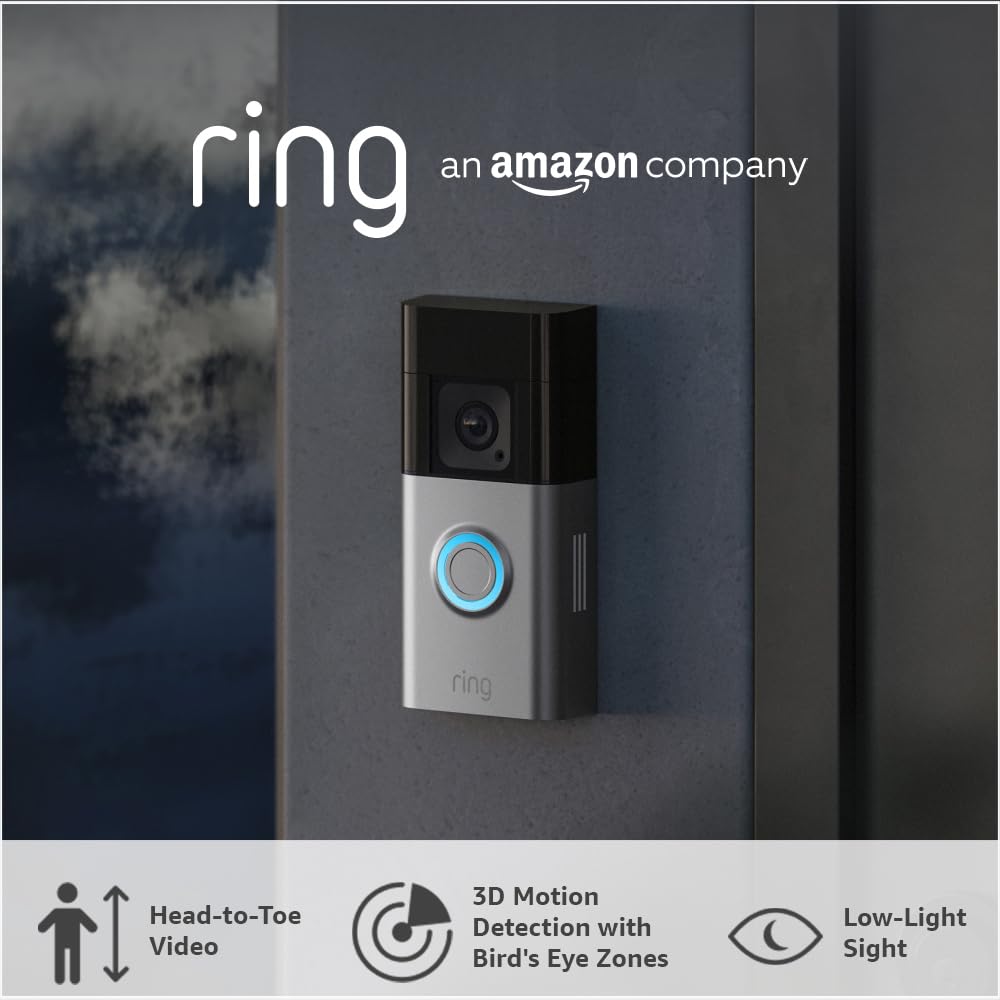
Ring Battery Video Doorbell Pro – Advanced Home Security & Connectivity, NewUpgrade your home security with the Ring Battery Video Doorbell Pro – Wireless Video Doorbell Security Camera. Designed to give you peace of mind, it delivers a head-to-toe 1536p HD view so you can see every detail clearly, from visitors to parcels at your doorstep. With advanced 3D Motion Detection and Bird’s Eye View, you’ll always know what’s happening around your home. The built-in colour night vision ensures crisp images even in the dark, while the wire-free battery design makes installation simple and flexible. Stay connected anywhere with instant notifications, two-way talk, and full integration with the Ring app, Alexa devices, and more. ✔️ Wireless video doorbell – Easy to install with a rechargeable battery, no wiring needed ✔️ 1536p HD head-to-toe view – See visitors and packages clearly in high definition ✔️ 3D Motion Detection & Bird’s Eye View – Advanced alerts and aerial perspective for extra security ✔️ Colour night vision – Crystal-clear video even in low light or darkness ✔️ Two-way talk with noise cancellation – Hear and speak to visitors in real time ✔️ Customisable motion zones – Focus on the areas that matter most ✔️ Smart alerts & notifications – Instant updates on your phone via the Ring app ✔️ Alexa compatible – Works seamlessly with Echo devices for hands-free monitoring ✔️ Quick-release battery pack – Easy to recharge and swap for uninterrupted security ✔️ Durable design – Built to withstand outdoor weather conditions The Ring Battery Video Doorbell Pro combines advanced motion detection, high-definition video, and smart home integration in one sleek device. Perfect for enhancing your home security, it ensures you never miss a visitor or delivery, day or night.174,49 £*Shipping: 0,00 £Secure redirect to the provider
-
The Readers Paradise Psychology of Efficiency: Master Your Mind, Maximize Your Output by Rishav - Self-Help Paperback - Non Fiction Productivity BookDeadlines pile up, distractions multiply, and your to-do list never seems to shrink. Psychology of Efficiency: Master Your Mind, Maximize Your Output by Rishav goes beyond standard time-management advice to tackle the real root of low performance: the mind itself. Rather than offering another planner or app, this paperback guide explores the mental frameworks, habits, and triggers that quietly drain focus and output. Readers are shown how to identify exactly where attention leaks occur and how to close those gaps for good, building sustainable, high-level performance from the inside out. This brand new paperback is built around a simple idea: efficiency is first a psychological skill, not a scheduling trick. Rishav draws on practical psychology to show that thoughts shape actions, and actions determine results, so productivity becomes a manageable skill rather than an overwhelming task.2,99 £*Shipping: 2,99 £Secure redirect to the provider
-
What does 'leur' and 'lui' mean?
In French, 'leur' is a pronoun that means 'their' or 'them' when referring to a group of people or things. It is used to indicate possession or indirect object. On the other hand, 'lui' is a pronoun that means 'him' or 'her' when referring to a singular person. It is used to indicate possession or as an indirect object. **
-
How is "eux" or "leur" used in French?
"Eux" and "leur" are both pronouns used in French to refer to people or things. "Eux" is used as a direct object pronoun to replace a group of people or things, while "leur" is used as an indirect object pronoun to replace a group of people. For example, "Je les ai vus" (I saw them) uses "les" as a direct object pronoun, while "Je leur ai parlé" (I spoke to them) uses "leur" as an indirect object pronoun. **
-
What is the difference between ses, leur and leurs?
Ses, leur, and leurs are all possessive adjectives in French, but they are used in different contexts. "Ses" is used to indicate possession by a singular third person, "leur" is used for a singular third person, and "leurs" is used for plural third person. For example, "ses chaussures" means "his/her shoes," "leur maison" means "their house," and "leurs voitures" means "their cars." It's important to pay attention to the number and gender of the noun being possessed in order to choose the correct possessive adjective. **
-
How are the object pronouns lui and leur used?
The object pronouns lui and leur are used to replace indirect objects in French. Lui is used to replace singular indirect objects, while leur is used to replace plural indirect objects. These pronouns come before the verb in a sentence and agree in gender and number with the noun they are replacing. For example, "Je lui parle" means "I am talking to him/her" and "Je leur donne des cadeaux" means "I am giving them gifts." **
Similar search terms for Leur
-
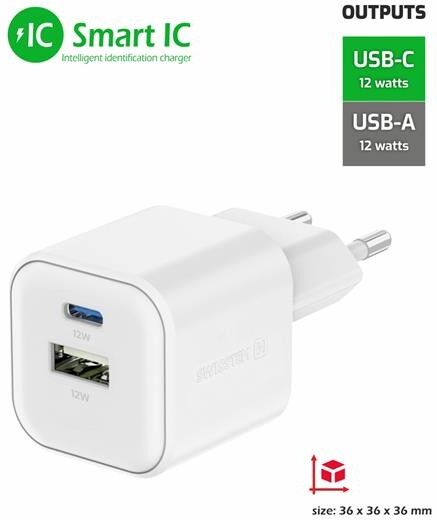
SWISSTEN 22071500 Charger Device, mobile communicationPlug Type: Schuko; Connectors/Plugs: USB, USB type-C; Charge Mode: GaN, PD; Overcharging protection: Yes; Overheating protection: Yes; Short Circuit Protection: Yes; Colour: white; Power [W]: 12; Number of inlets/outlets: 27,99 £*Shipping: 8,45 £Secure redirect to the provider
-
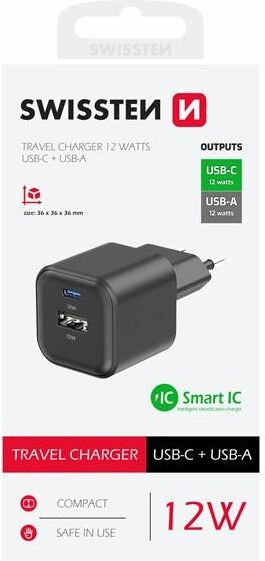
SWISSTEN 22071510 Charger Device, mobile communicationPlug Type: Schuko; Connectors/Plugs: USB type-C, USB; Charge Mode: GaN, PD; Overcharging protection: Yes; Overheating protection: Yes; Short Circuit Protection: Yes; Colour: black; Number of inlets/outlets: 2; Power [W]: 127,99 £*Shipping: 8,45 £Secure redirect to the provider
-
'I don't understand the use of lui and leur?'
In French, "lui" and "leur" are both used as indirect object pronouns to replace nouns that are the recipients of the action. "Lui" is used to refer to a singular masculine or feminine noun, while "leur" is used to refer to a plural noun. For example, "Je lui ai donné le livre" means "I gave him/her the book," and "Je leur ai donné les livres" means "I gave them the books." It's important to remember that these pronouns must agree in gender and number with the noun they are replacing. **
-
When do I use leur and leurs in French?
You use "leur" when you want to indicate possession or belonging for a singular noun, and "leurs" when you want to indicate possession or belonging for plural nouns. For example, "leur maison" means "their house" (singular), and "leurs voitures" means "their cars" (plural). **
-
How do you use the object pronouns lui and leur?
The object pronoun "lui" is used to replace indirect objects referring to a singular person, while "leur" is used to replace indirect objects referring to plural people. For example, "Je lui parle" means "I am talking to him/her" and "Je leur donne des cadeaux" means "I am giving gifts to them." These pronouns come before the verb in a sentence and help avoid repetition of the indirect object. **
-
What is the difference in French between 'ses' and 'leur'?
In French, 'ses' is a possessive adjective that is used to show possession for a singular noun that is masculine or feminine. It is used when referring to something that belongs to a third person. On the other hand, 'leur' is also a possessive adjective, but it is used for plural nouns. It is used when referring to something that belongs to a third person in the plural form. **
* All prices are inclusive of VAT and, if applicable, plus shipping costs. The offer information is based on the details provided by the respective shop and is updated through automated processes. Real-time updates do not occur, so deviations can occur in individual cases. ** Note: Parts of this content were created by AI.